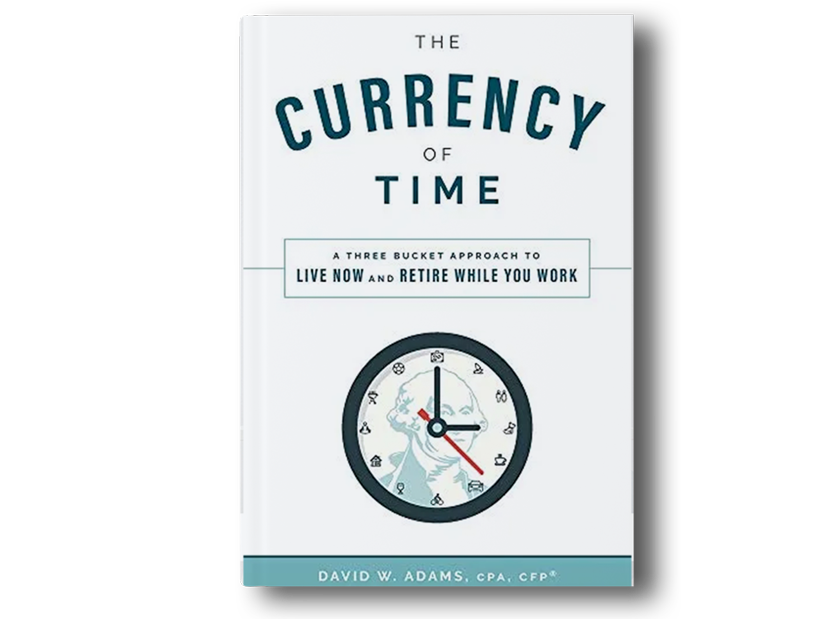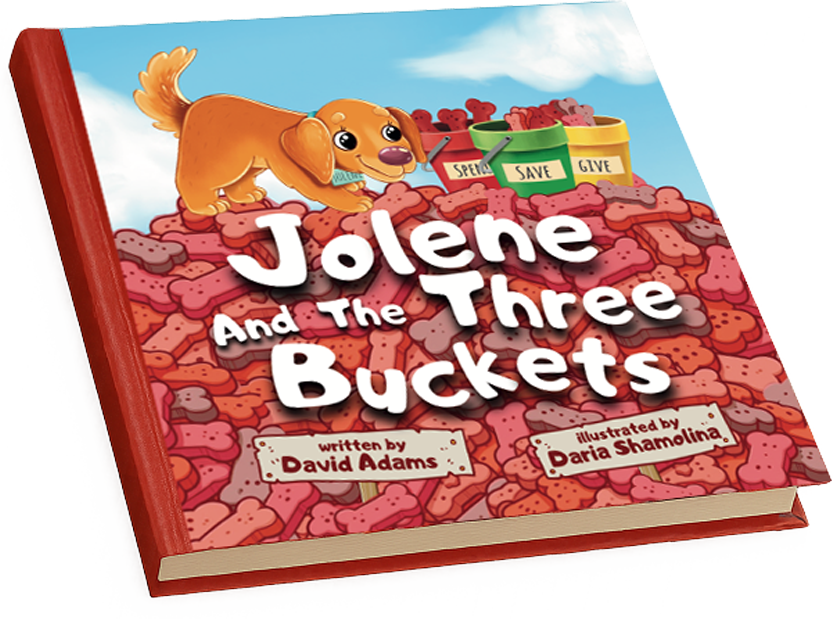







Retire While You Work® Podcast
Join us as we discuss various topics to help you find the path to viewing money as a means to the true currency, TIME, and learn how to build more memories and experiences.
View All Episodes






Join us as we discuss various topics to help you find the path to viewing money as a means to the true currency, TIME, and learn how to build more memories and experiences.
View All Episodes


When it comes to investing vs. saving, it is important to understand exactly what the difference between the two is. We believe that both are extremely important and serve specific purposes within any financial plan in order to help create balance and fund both short and long-term goals.
Saving is when you put away money for either short-term goals or expenses that you know are going to come up in the next 1-2 years. When you are saving, you are putting the money in a savings account at the bank or a short-term CD that is going to be liquid and there when you need it. Since this money is there for a specific short-term expense, we never want to put it in the stock market. This is because a lot of unpredictability can happen with the stock market within 1-2 years. You don’t want to risk prices taking a drastic dip right when you need that money available.
Investing is utilized mostly to help fund long-term goals, whatever those goals may be. A few common ones are retirement, a beach house, kids education – you get the idea. Because these goals are longer- term, there is more time to weather the volatility of the market. When the inevitable down year in the market does come, as an investor, you don’t need to worry, since this money may not even need to be used for 5, 10, 15 years or longer. With a longer timeline, you can make growth, rather than liquidity, the priority.
With any financial plan, one of, if not the biggest risk is purchasing power erosion caused by inflation. By investing rather than saving and earning a rate of return that hopefully outpaces inflation, you are able to reduce this risk and build out a plan with the goal to make your money last for those long-term goals.
When it comes to saving the money you will need to fund your short-term goals, we almost always suggest just keeping this money as cash in a savings account or money market account. Although the interest is close to nothing on these accounts, the money is safe, liquid and has a certain amount of FDIC insurance attached to it. In other words, this money will be there for you when you need it.
With the money that is going to be invested for the long-term, the question then becomes, “what do we invest in?” If you are just getting started, generally the easiest and best way to invest is in broad diversified mutual funds or ETFs. These are going to provide you exposure to hundreds of different companies and reduce the risk of being invested in just one individual stock. If you participate in your workplace 401k, these are the same type of investments that you hold inside of that.
At the end of the day, your plan needs and should have both savings and investing strategies in it. As we have talked about throughout this blog, which one is appropriate is almost always decided by the time frame in which you will need the money. If the money is needed in the short-term, then that is most always a savings strategy. If the money is for long-term goals, then this is where investing strategies come into play. The best way to get started is to sit down and think about what amount of money you may need in the next 1-2 years. That should then be your savings. Anything beyond that is the money you should look to invest. And remember, for the money that is invested, stick to your plan and don’t constantly buy and sell based on your opinion of what will happen in the near future.
Opinions expressed in this blog are those of the author and not necessarily those of Raymond James. All opinions are as of this date and are subject to change without notice. This material is intended for informational purposes only and is not a recommendation of any kind. Please speak to your financial professional regarding your specific situation. Every type of investment, including mutual funds, involves risk. In addition, there are fees and expenses associated with investing in mutual funds that do not usually occur when purchasing individual securities directly. ETF’s are subject to market fluctuations and the risks of their underlying investments. ETF’s are subject to management fees and other expenses.







Neither Raymond James Financial Services nor any Raymond James Financial Advisor renders advice on tax issues, these matters should be discussed with the appropriate professional.
Links to external content or websites, if provided, are for informational purposes only. Raymond James is not affiliated with and does not endorse, authorize or sponsor any of the listed websites or their respective sponsors. Raymond James is not responsible for the content of any website or the collection or use of information regarding any website's users and/or members.
The running stock ticker is not a recommendation to buy or sell stocks of the companies pictured.
Securities offered through Raymond James Financial Services, Inc., member FINRA/SIPC, marketed as Adams Wealth Partners. Investment advisory services offered through Raymond James Financial Services Advisors, Inc.Adams Wealth Partners is separately owned and operated and not independently registered as a broker-dealer or investment adviser.
Certified Financial Planner Board of Standards Inc. owns the certification marks CFP®, CERTIFIED FINANCIAL PLANNER™, CFP® (with plaque design) and CFP® (with flame design) in the U.S., which it awards to individuals who successfully complete CFP Board's initial and ongoing certification requirements. CFP® holders at Adams Wealth Partners, LLC are: David Adams, Myles Zueger, Carson Odom, Spencer Provow, and Nick Wolf.
CPA holders at Adams Wealth Partners, LLC are: David Adams, Carson Odom, and Christine Kinsley
CFA holders at Adams Wealth Partners, LLC are: Anthony Breen.
Please note that all archived content is for informational purposes only. Investment decisions should not be based on the content provided herein. For the most up-to- date statistical information and analysis, please contact your financial professional.
Raymond James financial advisors may only conduct business with residents of the states and/or jurisdictions for which they are properly registered. Therefore, a response to a request for information may be delayed. Please note that not all of the investments and services mentioned are available in every state. Investors outside of the United States are subject to securities and tax regulations within their applicable jurisdictions that are not addressed on this site. Contact your local Raymond James office for information and availability.

2026 Forbes America's Best-In-State Wealth Management Teams, developed by Shook Research, is based on the period from 3/31/2024 to 3/31/2025 and was released on 1/7/2026. Approximately 12,787 team nominations were received and 6,149 advisor teams won. Neither Raymond James nor any of its advisors pay a fee in exchange for this award. More: https://bit.ly/4rXUfUA. Please see https://bit.ly/40mwRVe for more info.
The 2026 Nashville Business Journal Best Places to Work award is based on employee surveys evaluated by Quantum Workplace. To be considered, a company must have a minimum of 10 employees, be located in one of the following counties in TN: Cheatham, Davidson, Maury, Montgomery, Robertson, Rutherford, Sumner, Williamson, or Wilson, and pay a participation fee of $250. Of 100+ companies considered, 40 were recognized. The award is not representative of any one client's experience, is not an endorsement, and is not indicative of an advisor's past or future performance. Raymond James is not affiliated with Nashville Business Journal or Quantum Workplace.
Barron’s Top 1,500 Financial Advisors 2026, is based on the period from 09/30/2024 – 09/30/2025 and was released on 03/20/2026. 7,855 nominations were received and 1,500 won. Neither Raymond James nor any of its advisors pay a fee in exchange for this award. More: https://bit.ly/4smNviU.
Please note that all archived content is for informational purposes only. Investment decisions should not be based on the content provided herein. For the most up-to- date statistical information and analysis, please contact your financial professional.
Raymond James is not affiliated and does not endorse the above-mentioned organizations.
Nashville Wealth Management & Financial Advisors | David Adams CPA, CFP® | Copyright © 2026 | Raymond James Privacy Notice | Raymond James Legal Disclosure