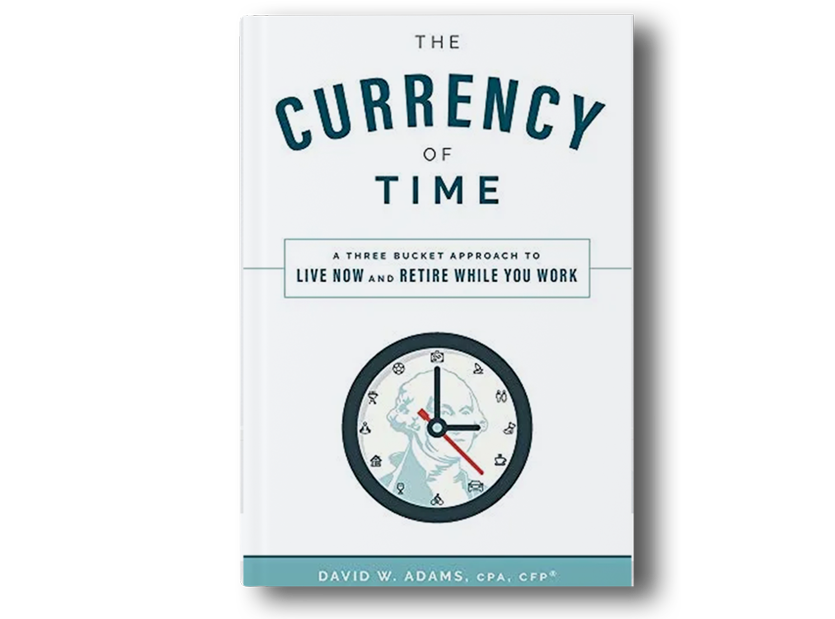







Retire While You Work® Podcast
Join us as we discuss various topics to help you find the path to viewing money as a means to the true currency, TIME, and learn how to build more memories and experiences.
View All Episodes






Join us as we discuss various topics to help you find the path to viewing money as a means to the true currency, TIME, and learn how to build more memories and experiences.
View All Episodes


Maybe you want your kids to finish the school year in the same neighborhood, or staying in a familiar place feels right while so much else is changing. If you’re wondering, “Can I afford to keep the house after divorce?” start by looking at two numbers: what it would cost to stay each month and how much savings you’d have available afterward.
Add up what it would actually cost to stay
Start with the mortgage payment you’d expect to have after the divorce. Then account for property taxes, homeowners insurance, HOA dues, utilities, and maintenance. If taxes and insurance are already included in your mortgage payment, count them once. Think about bigger expenses, too. If you know the roof or HVAC system may need replacing in the next few years, include room to save for that in your budget.
From there, put those costs into a budget based on the income you expect after divorce. Once you’ve accounted for housing, groceries, transportation, health insurance, and child care, how much would you have left for savings or an unexpected bill? Our guide to building a post-divorce budget can help you fill in the rest.
Find out what would happen to the mortgage
If both names are on the mortgage, taking one person off the title generally leaves the loan obligations in place. Ask your mortgage servicer what options are available for your loan and whether they would release the other borrower from responsibility. If refinancing is one of those options, ask for an estimate of the new monthly payment and closing costs so you can build your budget around those numbers. Your attorney can help you understand how the timing fits with your agreement.
Look at how much savings you’d have left
If keeping the house involves buying out your former spouse’s share, look at where that money would come from. Using savings could leave you with less cash for repairs or emergencies. Financing the buyout could change your monthly payment.
For example, you might find that you can cover the monthly costs of staying, but the buyout would use most of your available savings. If the house also needs work in the next year or two, that’s worth factoring in while you’re still weighing your options.
Compare staying with what moving would actually look like
Pick a realistic alternative, such as renting nearby or buying a smaller home, and price it out. Include one-time expenses like moving, a security deposit, or closing costs, as well as any changes to your commute or child care. Then look at what each option would leave you with month to month and how much savings you’d have on hand.
You may decide that staying is worth a higher monthly cost because it gives your family some continuity. Or you may find that moving gives you more room to handle unexpected expenses and keep saving for other goals. Seeing both options on paper can make it easier to decide what fits your life now.
At Adams Wealth Partners, we help people think through how decisions about the home fit into their broader financial picture. If you’re weighing your options, learn more about our divorce financial planning services.
–
Any opinions are those of Adams Wealth Partners and not necessarily those of Raymond James. Expressions of opinion are as of this date and are subject to change without notice. There is no guarantee that these statements, opinions or forecasts provided herein will prove to be correct.
Raymond James and its advisors do not offer tax or legal advice. You should discuss any tax or legal matters with the appropriate professional.







Neither Raymond James Financial Services nor any Raymond James Financial Advisor renders advice on tax issues, these matters should be discussed with the appropriate professional.
Links to external content or websites, if provided, are for informational purposes only. Raymond James is not affiliated with and does not endorse, authorize or sponsor any of the listed websites or their respective sponsors. Raymond James is not responsible for the content of any website or the collection or use of information regarding any website's users and/or members.
The running stock ticker is not a recommendation to buy or sell stocks of the companies pictured.

Securities offered through Raymond James Financial Services, Inc., member FINRA/SIPC, marketed as Adams Wealth Partners. Investment advisory services offered through Raymond James Financial Services Advisors, Inc.Adams Wealth Partners is separately owned and operated and not independently registered as a broker-dealer or investment adviser.
Certified Financial Planner Board of Standards Inc. owns the certification marks CFP®, CERTIFIED FINANCIAL PLANNER™, CFP® (with plaque design) and CFP® (with flame design) in the U.S., which it awards to individuals who successfully complete CFP Board's initial and ongoing certification requirements. CFP® holders at Adams Wealth Partners, LLC are: David Adams, Myles Zueger, Carson Odom, Spencer Provow, and Nick Wolf.
CPA holders at Adams Wealth Partners, LLC are: David Adams, Carson Odom, and Christine Kinsley
CFA holders at Adams Wealth Partners, LLC are: Anthony Breen.
Please note that all archived content is for informational purposes only. Investment decisions should not be based on the content provided herein. For the most up-to- date statistical information and analysis, please contact your financial professional.
Raymond James financial advisors may only conduct business with residents of the states and/or jurisdictions for which they are properly registered. Therefore, a response to a request for information may be delayed. Please note that not all of the investments and services mentioned are available in every state. Investors outside of the United States are subject to securities and tax regulations within their applicable jurisdictions that are not addressed on this site. Contact your local Raymond James office for information and availability.

2026 Forbes America's Best-In-State Wealth Management Teams, developed by Shook Research, is based on the period from 3/31/2024 to 3/31/2025 and was released on 1/7/2026. Approximately 12,787 team nominations were received and 6,149 advisor teams won. Neither Raymond James nor any of its advisors pay a fee in exchange for this award. More: https://bit.ly/4rXUfUA. Please see https://bit.ly/40mwRVe for more info.
The 2026 Nashville Business Journal Best Places to Work award is based on employee surveys evaluated by Quantum Workplace. To be considered, a company must have a minimum of 10 employees, be located in one of the following counties in TN: Cheatham, Davidson, Maury, Montgomery, Robertson, Rutherford, Sumner, Williamson, or Wilson, and pay a participation fee of $250. Of 100+ companies considered, 40 were recognized. The award is not representative of any one client's experience, is not an endorsement, and is not indicative of an advisor's past or future performance. Raymond James is not affiliated with Nashville Business Journal or Quantum Workplace.
Barron’s Top 1,500 Financial Advisors 2026, is based on the period from 09/30/2024 – 09/30/2025 and was released on 03/20/2026. 7,855 nominations were received and 1,500 won. Neither Raymond James nor any of its advisors pay a fee in exchange for this award. More: https://bit.ly/4smNviU.
Please note that all archived content is for informational purposes only. Investment decisions should not be based on the content provided herein. For the most up-to- date statistical information and analysis, please contact your financial professional.
Raymond James is not affiliated and does not endorse the above-mentioned organizations.
Nashville Wealth Management & Financial Advisors | David Adams CPA, CFP® | Copyright © 2026 | Raymond James Privacy Notice | Raymond James Legal Disclosure